Winter conditions create serious cable management challenges for construction sites. Snow, ice, freezing temperatures, and reduced visibility all increase the risk of wear, breakage, and safety hazards. Poorly organized cables become harder to handle and more likely to fail during cold-weather work.
This guide explains how to keep cables organized, protected, and accessible throughout winter. It focuses on practical field techniques that improve safety and reduce downtime on active job sites.
Why Winter Demands Better Cable Organization
Cables behave differently in cold environments. Insulation stiffens, connectors become brittle, and moisture freezes around contact points.
Construction sites with heavy foot traffic, equipment movement, and temporary power lines face elevated risks.
Reduced Flexibility in Cold Temperatures
Cold temperatures make many cable jackets rigid.
A stiff cable kinks more easily and becomes harder to route or coil.
Increased Moisture Exposure
Snow and ice expose cables to moisture that freezes and expands.
This cycle accelerates wear, cracking, and surface abrasion.
Higher Trip and Impact Hazards
Snow hides cables under footpaths or equipment routes.
Hidden cables create tripping hazards and risk crushing damage.
Identifying High-Risk Cable Zones on Construction Sites
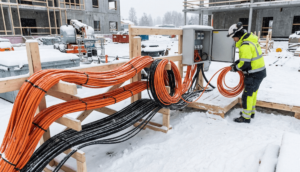
Certain areas demand extra attention during winter. Heavy equipment, ice accumulation, and worker traffic increase wear and failure risks.
Identifying these zones helps organize cables safely.
Walkways and Work Paths
Snow and mud cover cables left on the ground.
These areas produce slipping hazards and cable abrasion.
Equipment Operating Zones
Machinery compresses cables or drags them across frozen surfaces.
Cables here require elevated routing and extra protection.
Temporary Power Connections
Generators, distribution panels, and lighting systems use exposed cables.
These areas require organized routing to prevent tangles and damage.
Choosing the Right Cables and Accessories for Winter Use
Cable organization starts with the right materials. Winter-ready products handle freezing temperatures and outdoor exposure better than standard options.
Use materials designed for cold-weather performance.
Use Cold-Rated Extension Cords and Power Cables
Cold-rated jackets stay flexible in low temperatures.
They resist cracking and reduce kinks during handling.
Choose Weather-Resistant Cable Ties
Cold-rated cable ties maintain strength and flexibility.
Standard ties often snap when exposed to freezing temperatures.
Select Durable Cable Covers
Cable covers protect against abrasion and heavy loads.
Use covers rated for outdoor and winter construction.
Preparing Cables for Winter Conditions
Preparation prevents early damage. Clean, dry, and organized cables perform better in freezing environments.
Inspect cables before winter sets in.
Check for Cuts or Cracks
Cold weather exaggerates minor damage.
Replace cables with visible cracks or flattened sections.
Clean and Dry All Cables
Snow and moisture freeze on dirty surfaces.
Dry cables reduce icing and improve handling.
Pre-Coil and Label Cables
Labeling improves organization on busy job sites.
Pre-coiled cables are easier to deploy in cold weather.
Techniques for Organizing Cables in Snow and Ice
Winter creates physical challenges for cable routing. Proper organization prevents tangles, breakage, and trip hazards.
Use routing methods that minimize weather exposure.
Keep Cables Elevated
Elevate cables off the ground with hooks or stands.
Elevation prevents cables from freezing into snowbanks.
Route Cables Along Stable Structures
Use scaffolding, walls, or fencing to anchor cables.
Stable routing reduces bending stress.
Avoid Sharp Bends
Cold cables crack under sharp angles.
Use wide, gentle curves to reduce strain.
Helpful Organization Tools
• Elevated hooks and stands
• Heavy-duty cable covers for walkways
Protecting Cables From Snow Load and Ice Movement
Snow load compresses cables, while ice shifts and drags along surfaces.
Protection methods reduce abrasion and insulation wear.
Install Protective Sleeves
Sleeves add a buffer between cables and snow.
They reduce scraping during ice movement.
Use Conduit Where Loads Are Heavy
Conduit prevents compression and crushing.
Use conduit where equipment or snow accumulates.
Keep Cables Clear of Roof Edges
Snow and icicles fall from roofs.
Keep cable runs away from drip paths.
Managing Temporary Power Systems in Winter
Construction power systems depend on clear, organized cable routing. Winter adds extra stress on every connection.
Proper organization prevents outages and improves site safety.
Use Weather-Rated Connection Boxes
Boxes protect wiring from snow and freezing rain.
Sealed enclosures prevent moisture intrusion.
Label Power Lines Clearly
Labels remain visible even with gloves.
Clear labeling reduces mistakes during setup or maintenance.
Gloves reduce dexterity in winter. Safe cable handling requires deliberate technique.
Use methods that prevent damage and strain.
Use Glove-Friendly Grips
Gloves slip on wet cable jackets.
Textured grips improve control and reduce accidents.
Warm Cable Sections Before Bending
Warm cables bend more easily.
Avoid bending stiff sections to prevent cracking.
Coil Cables Using Larger Loops
Small loops stress cold insulation.
Use larger loops to reduce strain.
Preventing Tangles and Snags in Snowy Conditions
Snow covers gaps, rebar, and debris that catch cables.
Reducing snags improves routing speed and worker safety.
Run Cables Along Clear Paths
Clear snow from routing areas.
A clean path reduces snag points.
Avoid Running Cables Over Rough Ground
Frozen gravel and debris cut into insulation.
Stay on graded, smooth surfaces whenever possible.
Use Temporary Cable Trays
Trays keep cables organized in high-traffic zones.
They prevent tangles under ice.
Inspections and Maintenance During Winter
Regular inspections prevent failures and support safe operation. Winter weather changes quickly.
Check critical areas often.
Inspect After Heavy Snow or Rain
Moisture increases weight and tension.
Clear snow from routing paths and covers.
Look for Stiff or Brittle Cables
Cold conditions stiffen jackets.
Replace sections that feel rigid or cracked.
Check for Loose Ties or Mounts
Cold-weather movement loosens supports.
Retighten or replace weak ties.
Repairing Cables Safely in Winter Conditions
Repairs become more difficult in cold environments. Cold jackets crack easily and frozen soil restricts movement.
Use cautious, controlled techniques when repairing outdoor cables.
Warm the Repair Area
Warm materials bend more safely.
Never attempt fast repairs on frozen cables.
Replace Damaged Sections Fully
Partial repairs fail under winter stress.
Replace entire sections with winter-rated cable.
Protect Repaired Areas Immediately
Use sleeves or conduit to prevent repeat damage.
Protective layers add durability through the season.
Avoiding Common Cable Organization Mistakes During Winter
Simple mistakes create major winter hazards. Avoid these errors when organizing construction-site cables.
Better practices increase safety and reduce downtime.
Leaving Cables on the Ground
Ground-level placement increases icing and abrasion.
Elevate cables whenever possible.
Using Standard Cable Ties
Standard ties snap in cold temperatures.
Use cold-rated or weather-resistant versions.
Ignoring Labeling Needs
Unlabeled cables slow troubleshooting.
Clear labels improve safety and efficiency.
Planning a Winter Cable Organization Strategy
A structured plan helps crews organize cables safely throughout winter.
Include preparation, routing, protection, and inspection in your approach.
Key Elements of a Winter Strategy
Use cold-rated materials, keep cables elevated, protect high-load areas, and inspect connections after storms.
Training ensures consistent application of these methods.
Final Thoughts
Winter adds complexity to construction-site cable management. Snow, ice, and freezing temperatures strain every connection, cable run, and support. Proper organization, cold-rated materials, protective sleeves, and consistent inspection help maintain safe, reliable cable systems all season.
When crews prepare for winter conditions, the entire site operates more safely and efficiently through harsh weather.
For more insights and tips on cable ties and other related products, explore cabletiesunlimited.com, get a quick and free quote, and follow us on our social media communities on Facebook and Instagram!
written By
Kyle Hinckley
Kyle Hinckley is a cable management specialist with over 15 years of experience in industrial and commercial
applications. He has helped hundreds of businesses optimize their cable infrastructure and improve workplace
organization.
About Cable Ties Unlimited
Cable Ties Unlimited represent one of the most cost-effective solutions for organization, repairs, and creative projects.
By thinking beyond their traditional use for cable management, you can discover hundreds of applications that
will save you time and money.
Get Expert Cable Management Tips
Join 10,000+ professionals receiving our weekly newsletter with industry insights, product guides, and
exclusive offers.


 Certain areas demand extra attention during winter. Heavy equipment, ice accumulation, and worker traffic increase wear and failure risks.
Identifying these zones helps organize cables safely.
Certain areas demand extra attention during winter. Heavy equipment, ice accumulation, and worker traffic increase wear and failure risks.
Identifying these zones helps organize cables safely.